Wet Roads Ahead: Are You Driving the Right Way in Heavy Rain?
Learn what most drivers get wrong and how to stay safe when wet roads, slick surfaces, and poor visibility make driving risky


Quick summary
- Before driving in heavy rain, check your tires, wipers, lights, washer fluid, and the weather forecast, and allow extra travel time.
- Slow down, increase your following distance, avoid sudden braking or steering, and turn off cruise control on wet roads.
- Never drive through standing water or floodwater, which can stall your vehicle or conceal dangerous road conditions.
- If your vehicle hydroplanes, ease off the accelerator, avoid hard braking, and steer gently in the direction you want to travel.
- If heavy rain makes it difficult to see the road or control your vehicle, pull over in a safe location away from traffic, and wait for conditions to improve.
Heavy rain is one of the most hazardous driving conditions. In fact, 47 percent of weather-related vehicle crashes occur during rainfall, and the risks increase when it falls heavily, according to the US Department of Transportation. The good news: With the proper preparation and know-how, you can navigate driving in heavy rain safely. Here’s how.
Before you head out
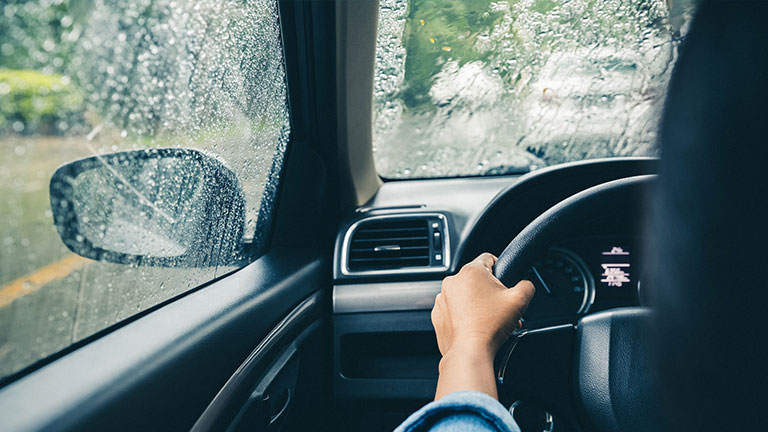
Driving safely in a downpour starts with a safe vehicle. Check these items before getting on the road.
- Make sure your tires have good tread depth and are properly inflated. Bald or under-inflated tires significantly reduce traction on the road, which is critical when driving in heavy rain.
- Ensure your wipers, head and taillights, and turn signals are all in goodworking order. You’ll need all of these to see—and be seen—while driving.
- Plan for extra time on the road. Heavy rain often requires slower speeds, so build in those extra minutes to avoid feeling rushed.
- Check your windshield washer fluid. Rain can kick up grime and road spray, so you may need to wash your windshield more than usual.
- Clear fog from windows before driving. Use the defroster or air conditioning to improve visibility.
- Check the weather and radar. If severe storms or flash flooding are expected, delaying your trip may be the safest option.
While you’re on the road
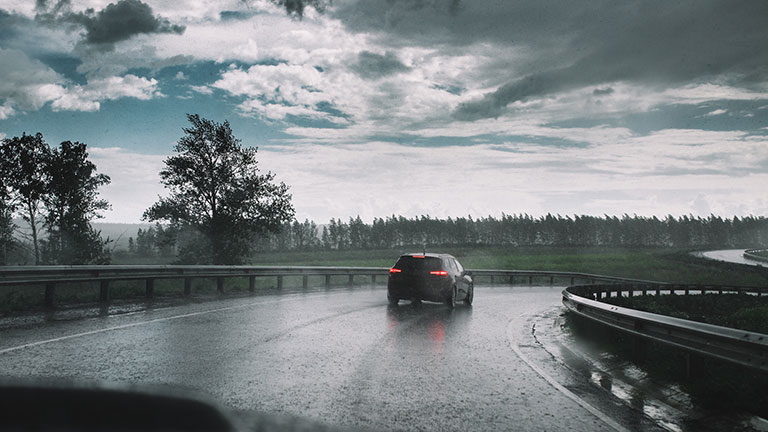
Heavy rain creates several hazards for drivers, including slick roads, an increased risk of hydroplaning, and reduced visibility. Follow these tips to help you drive more safely in these conditions.
Navigating slick roads
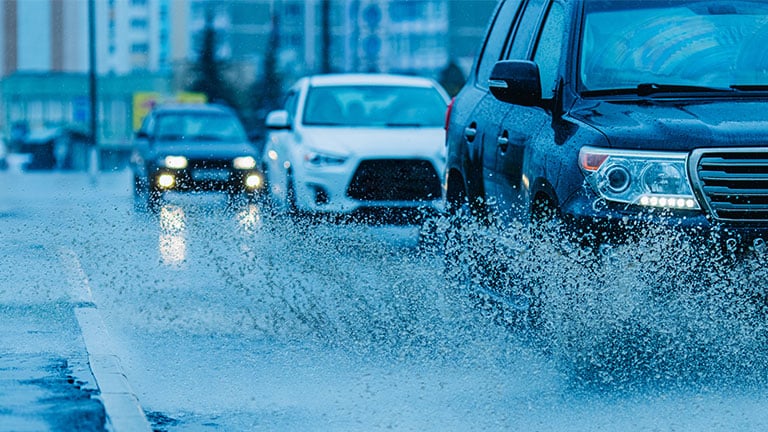
Wet roads can quickly become slippery, especially when the rain first begins to fall. Dirt and oil build up on the roads during dry weather, and once that residue mixes with rain, it can make the surface especially slick. Keep these tips in mind when driving in heavy rain.
- Avoid sudden braking or sharp movements. Instead, brake earlier and apply gentle pressure. In heavy rain, it takes longer to slow down.
- Increase following distance. Leave several car lengths between you and the vehicle ahead to give yourself more time to brake on wet roads.
- Stay in control of your vehicle. Turn off cruise control in wet conditions, since it can make it harder to react quickly if your tires lose traction.
- Slow down. Reducing your speed by one-third can help maintain control. For example, if the speed limit is 30 miles per hour, consider driving closer to 20 miles per hour in heavy rain.
- Position your vehicle towards the center of the lane. Water tends to collect near the outer edges of the road, so this can help you avoid deeper puddles.
- Never drive through standing water. Deep water can stall your engine, and flooded roads may hide debris, potholes, or washed-out pavement. Turn around and find another route.
- Drive with dry footwear. Wiping the soles of your shoes on your floor mat can help improve grip on the pedals.
What to do if you start to skid
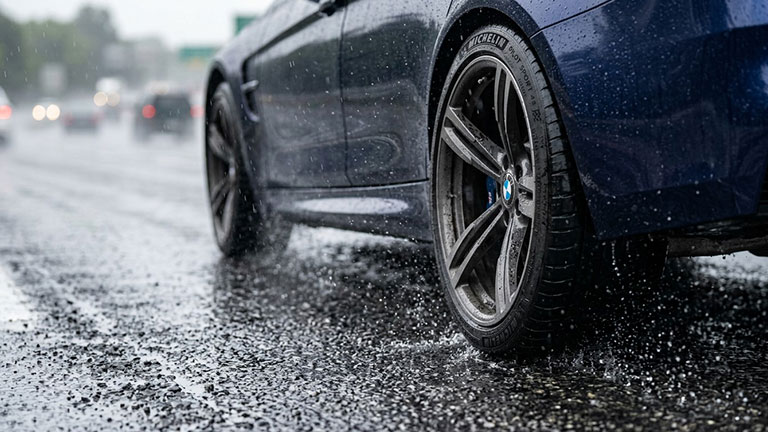
It’s called hydroplaning: when a layer of water builds up between the road and your tires, your vehicle can lose traction and begin to slide. Hydroplaning can be frightening because your ability to steer and brake may be greatly reduced. Here’s what to do if your car starts to skid.
- Ease off the accelerator. This will allow your car to slow naturally.
- Avoid slamming on the brakes. Hard-braking can lock your wheels and cause you to lose even more traction.
- Steer gently in the direction you want the car to go. Sudden steering can make the skid worse.
As your tires regain contact with the road, you’ll feel the vehicle respond normally again.
Managing reduced visibility
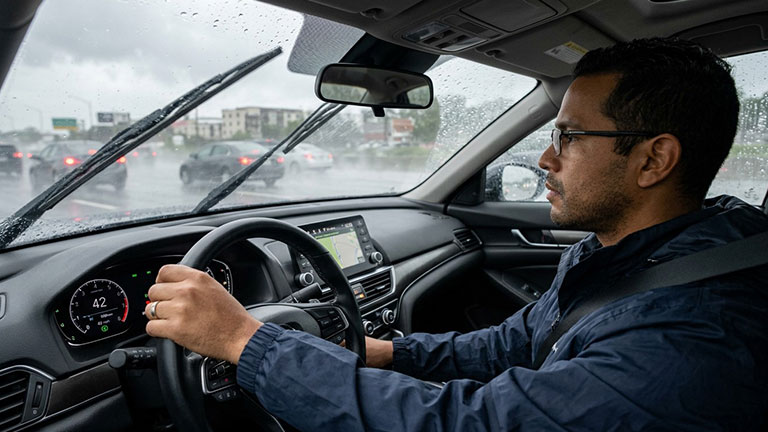
Whether it’s pounding rain, spray from other vehicles, or foggy windows, heavy rain can significantly limit your ability to see the road—and for other drivers to see you. These tips can help.
- Keep your headlights on. In most states, drivers are required by law—often referred to as “wipers on, lights on” laws—to turn on headlights whenever windshield wipers are in continuous use.
- Increase followingdistanceand slow down. Wet roads and limited visibility make it harder to react quickly.
- Use your defroster. Windows may fog up easily in humid conditions, so run the defroster or air conditioning to keep the glass clear.
- Give large vehicles extra space. Trucks and buses can create heavy spray that temporarily reduces visibility.
When to pull over
Sometimes the weather wins—and it’s simply too dangerous to keep driving. If rain is so heavy that you can’t clearly see the road, other cars, or maintain control of your vehicle, pull over and wait for the storm to pass.
If you do pull over, choose a safe location away from traffic, such as a rest area or parking lot, and turn on your hazard lights so that other drivers can more easily see you in the rain. If you must stop on the shoulder, stay in the vehicle with your seatbelt on until it’s safe to move.
…..
While driving in heavy rain can be challenging, preparation and cautious driving can reduce the risks. Check a trusted weather source before heading out, give yourself extra time on the road, and use these tips to help arrive safely.
Frequently Asked Questions
How fast should you drive in heavy rain?
Slow down enough to stay in control and maintain a clear view of the road. Reduce your speed by about one-third in heavy rain—for example, driving closer to 20 miles per hour in a 30-mph zone.
What should you do if your car starts hydroplaning?
Ease off the accelerator and avoid slamming on the brakes. Steer gently in the direction you want the vehicle to go, then wait for the tires to regain contact with the road before making normal steering or braking adjustments.
Can you drive through standing water during a heavy rainstorm?
No. Standing or moving water can hide potholes, debris, and washed-out pavement, and it can cause you to lose control of your vehicle. The safest choice is to turn around and find another route rather than risk driving through flooded areas.
How much following distance should you leave in heavy rain?
Leave more space than you normally would so you have additional time to react and stop on wet pavement. The National Weather Service recommends adding extra following time in heavy rain.
Should you use cruise control when driving in heavy rain?
It's best to turn cruise control off in wet conditions. Keeping direct control of your speed makes it easier to respond if your tires lose traction.
Do you need to turn on your headlights when it rains?
Turning on your headlights makes it easier for other drivers to see you and is recommended when driving in rain. Headlight requirements vary by state, including rules tied to windshield-wiper use, so check the laws where you drive.
When should you pull over because of heavy rain?
Pull over when rain makes it difficult to see the road, other vehicles, or the edges of the roadway at a safe distance, or when you can no longer maintain control comfortably. Choose a rest area, parking lot, or other protected location away from traffic when possible.
Is the road more slippery when rain first starts?
It can be. Dirt and oil that accumulate on dry pavement can mix with the first rainfall and make roads especially slick, so use extra caution when rain begins.
What should you check on your car before driving in heavy rain?
Make sure your tires have adequate tread and the correct inflation, and check that your wipers, headlights, taillights, and turn signals work properly. Top off windshield washer fluid, and clear fog from the windows before you leave so you can see and be seen.