Your Guide to Bedding Hygiene and a Healthier Night’s Sleep
Follow these 7 expert tips to keep your bedding clean, fresh, and allergen-free


We sleep in our beds every night, trusting them to bring us calm and comfort. But are you giving your mattress and bedding the care they truly need?
Here’s how to keep your mattress and bedding smelling fresh and free of dust and germs, according to Katie Sullivan, director of Issue Communications at the American Cleaning Institute.
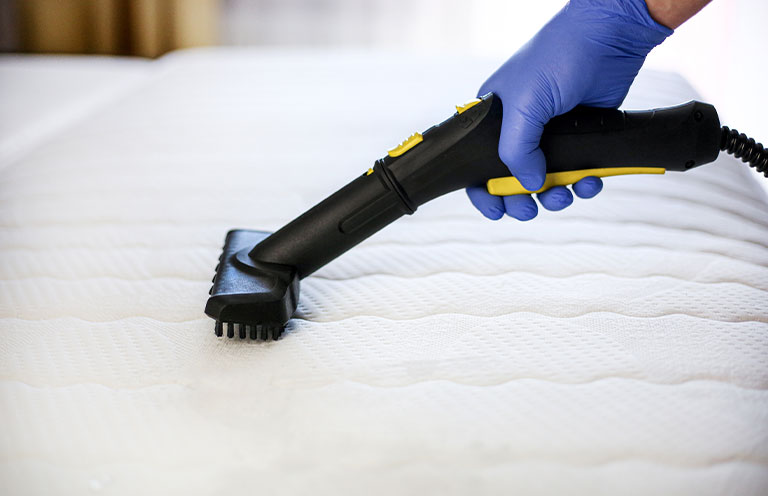
1. Use a mattress protector to prevent stains and spills from soiling your mattress.
Sullivan recommends cleaning your mattress a few times a year. This includes vacuuming it to remove any loose dirt or dust and lightly spraying it with a fabric refresher to remove any lingering odors.
“For double-duty, choose [a fabric refresher] with a formula designed to reduce allergens, from pollen and dust mites,” Sullivan says. “Vacuum and spray one side. Wait until the mattress is dry, and then flip it over and vacuum and mist the other side.”
2. Wash your bedsheets every two weeks.
Washing your sheets regularly is key to maintaining clean bedding. Sullivan recommends using the regular wash cycle with warm or hot water, which will help remove dust mites and allergens—and then drying in a hot dryer.
“Hanging sheets outside can attract dust and pollen,” Sullivan says, cautioning against this traditional drying method. “The key is to ensure all materials are fully dried before returning to the bed, as moisture can attract mold and dust mites."

3. Wash blankets, comforters, and mattress pads monthly.
Sullivan says these items are best cleaned using a gentle wash cycle. For the mattress pad, check the care label, and then wash it with bleach and the hottest water that’s safe for the fabric.
Be sure to put the bedding items in the dryer, pausing the cycle a few times to fluff the blankets to ensure even drying.
The more decorative items—such as bed skirts, throw pillows, bedspreads, coverlets, and throws—are often dry-clean only; check the labels to be certain.
4. Replace your pillows every year.
In addition to replacing them annually, Sullivan recommends washing pillows at least four times a year. She adds that pillowcases should be washed every two weeks.
“Use special dust mite-proof covers to keep dust mites from going through pillows and mattresses,” Sullivan says, adding that they're sometimes called "allergen-impermeable" covers. “Wipe covers with a damp cloth every week.”
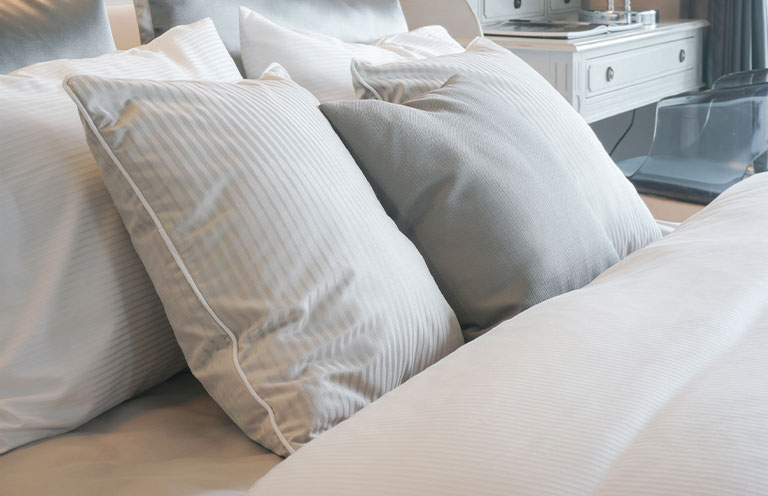
5. Wash pillows two at a time.
If you have a top-load washer, you can agitate two pillows at a time for one or two minutes on the gentle cycle to restore their fluffiness. Using the spin-dry feature is helpful for removing moisture and should be done at least twice to extract as much moisture as possible, Sullivan says.
“When drying, remove them and fluff them periodically,” she advises. “This will prevent clumping and promote even drying. Tossing a few tennis balls in the dryer with the pillows will also help prevent clumping.”
It’s important to check the label on each pillow, as some down and feather pillows must be dry- cleaned.
If your skin is acne-prone, heed this advice from skin care expert Sylvia Brownlee: Wash your pillowcases regularly, and flip them over every other day to prevent oil and bacterial buildup from irritating your skin. Brownlee also suggests using laundry detergents and fabric softeners that are fragrance-free.

6. Pre-wash when necessary.
Extreme conditions—such as illness, flooding, or large spills—may require a pre-wash of clothes and bedding in cool water with laundry detergent to prevent stains from setting, says Sullivan. After this pre-wash, wash the items again with detergent in hot water.
When illness is involved, wash bedding with a laundry sanitizer, such as bleach, and wash the items separately from other family members’ laundry. Sullivan recommends wearing gloves while handling these items and disinfecting surfaces afterward.
Adding this pre-wash step can help ensure you maintain hygienic and clean bedding, protecting your sleeping sanctuary from germs, allergens, and lingering odors.
7. Consider skipping the dry cleaners when your bed skirt doesn't look dirty.
If your bed skirt isn’t visibly dirty, Sullivan suggests tossing it in the dryer with a fabric softener sheet. The heat from the dryer can help kill germs, while the sheet will trap dust.
. . . . .
Incorporating these tips into your cleaning regimen and keeping your sleep space tidy and clean, adds Sullivan, provides for a healthier, more peaceful sleep environment.