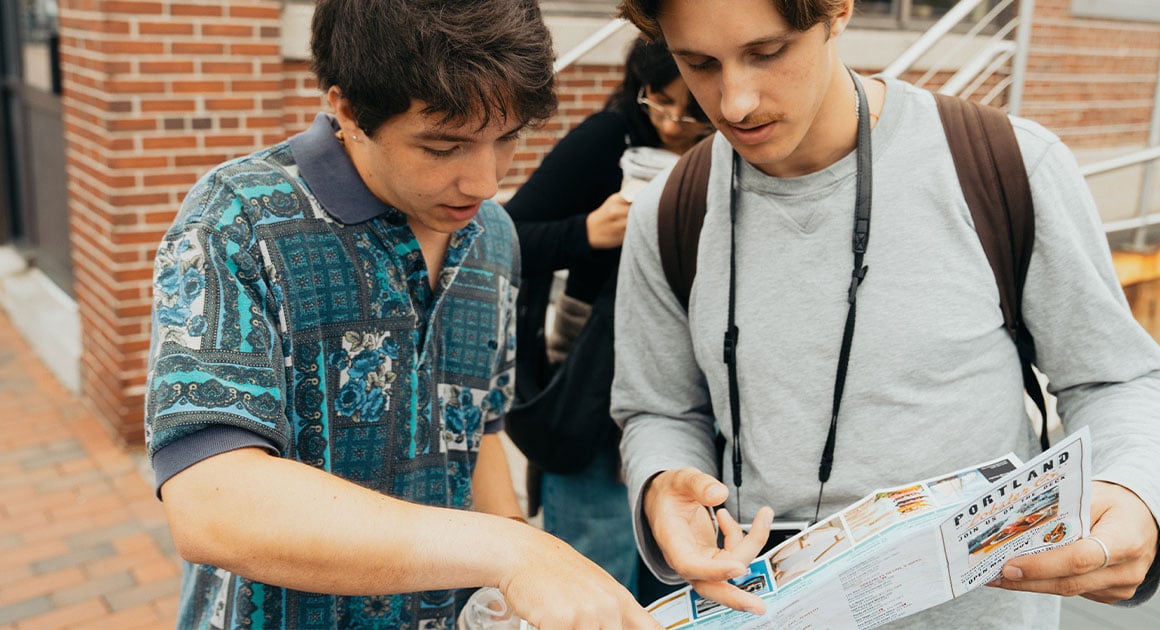


The Great American Road Trip was always about the allure of the open road. There was a sense of freedom in discovering something new and relying solely on a map and your sense of direction to get from point A to point B. It was almost magical mapping out a trip across sheets of paper and capturing tangible photos to cherish every memory along the way, with a focus on the journey itself.
Today, however, road trips have become almost transactional, with a robotic voice guiding every twist and turn and Google making recommendations for everything—from restaurant stops to restroom breaks. Millennials were the last generation to experience the classic road trip. Their younger Gen Z peers grew up with technology infused throughout their travels.
But what would it be like for a younger generation of travelers to experience the open road without modern technology? No turn-by-turn directions. No texting. No social media posts. No seeing the world through a screen.
Friends Cameron, Max and Bella decided to find out. Here’s what they discovered.
Gearing up
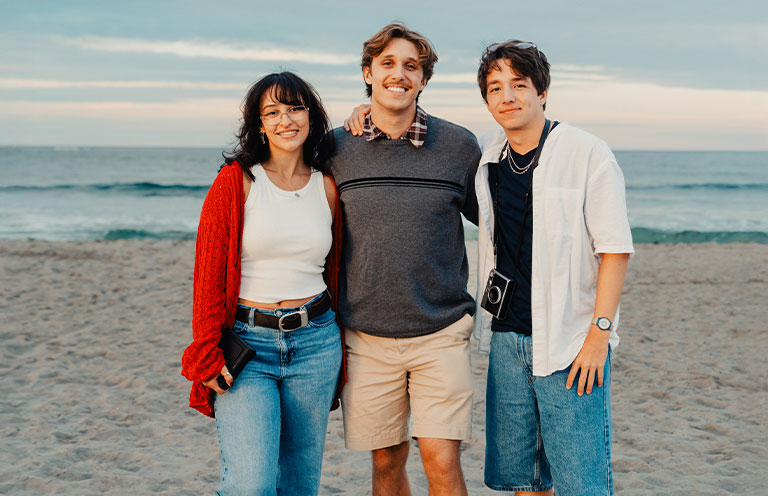
The friends from southern Connecticut, all 21 years old, had grown up with smartphones tied to almost every aspect of their lives. As college students nearing the end of summer break, they wanted to experience what they had long heard about from their parents: the freedom of a classic road trip without the trappings of modern technology.
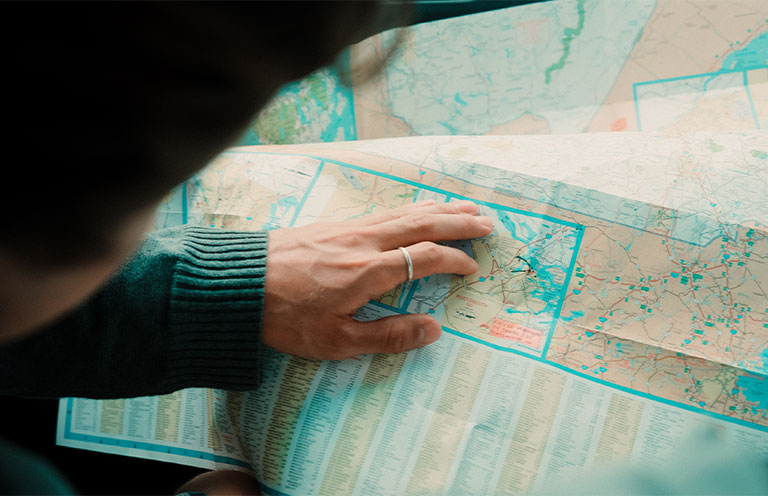
The friends gathered at Cameron’s house in Clinton, Connecticut, to prepare for their journey. To eliminate the temptation of technology, the group locked their phones away in a case, which they would later stow in the trunk of their car. Armed with a flip phone for emergencies, the trio pulled out a collection of maps and spoke candidly about the trip.
“So much of our time that we spend on our phone is just wasted time,” said Max, who is pursuing a degree in environmental science.
Cameron echoed that sentiment.
“Very rarely do I take time to be with my own thoughts and think. I’m looking forward to that,” said Cameron, who is studying neuroscience. “It’s strange because most of my life, I’ve spent having that device that can do anything for me. So, to have a trip where we’re learning to go without it and just rely on ourselves is kind of foreign to me.”
For Bella, the reality of the trip was starting to sink in.
“Locking our phones away is making the gravity of the situation clear,” said Bella, who is also studying neuroscience. “I’m feeling excited, but I’m really nervous.”
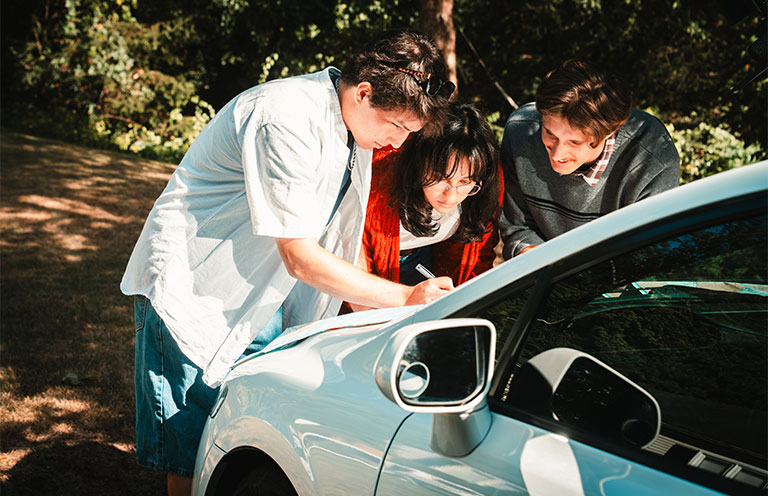
With maps sprawled across the hood of the car, they sketched out the journey ahead. The first stop would be Worcester, Massachusetts, for lunch, followed by a coffee break in Portsmouth, New Hampshire, before arriving at their final destination: Portland, Maine. The more than 200-mile drive over two days looked daunting on paper, especially around the Boston area where interstates twisted like spaghetti noodles across the page.
Getting out
With suitcases packed, the group hit the road. Their white sedan was stocked with compact discs and a Polaroid camera—retro novelties to this generation—to document the journey. Cameron drove while Max copiloted from the front passenger seat and Bella navigated from the back seat.
“I’m feeling like a real cartographer right now,” Max said.
“We’re really doing this, and I have no idea where we’re going to end up,” Cameron responded.
“We’re fully off the grid right now,” Max added.
“This is the first time, I’m going to see so many of these places,” Bella shared. “It’s going to be really cool, but I also don’t know what to expect.”
As they traversed the rolling hills of northeastern Connecticut, they began locking in on reaching their first stop: Armsby Abbey in downtown Worcester. With afternoon traffic building, Max guided them off the highway and onto local streets.
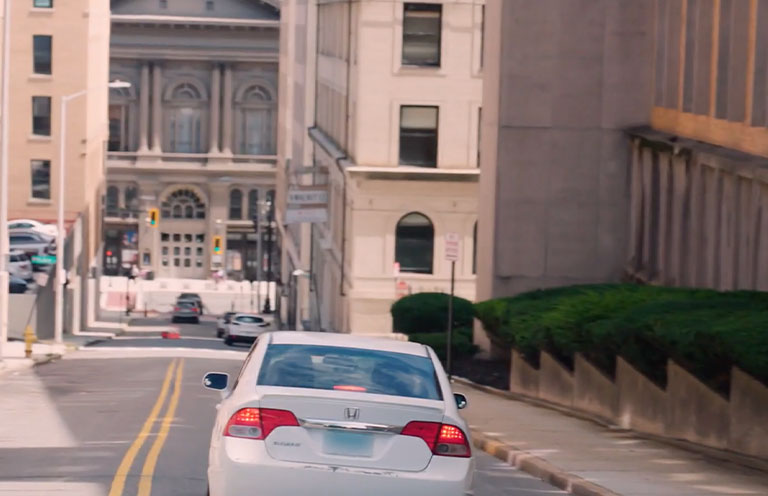
“Alright, left or right?” Cameron asked.
“Right. We’re going to turn right,” Max said.
After several wrong turns, the group realized they were not getting any closer to their destination.
“So, we may be going the wrong way,” Cameron acknowledged.
“We are so close,” said Max, growing discouraged.
“You guys have the hard decisions to make up front,” Bella joked from the back seat.
Moments later, their destination appeared like an oasis in a directionless desert. Cameron pulled into a nearby parking spot, and they entered the restaurant, stomachs rumbling.
“That was really satisfying that we just did that,” said Cameron, seated at the table. “A couple hours in, and I’m already feeling withdrawals from not having technology.”
Bella was satisfied with their accomplishment, too, as they adjusted to this new way of traveling unplugged.
“I keep going to text my mom and my friends to say, ‘This is where I am’ or ‘This is what we’re doing,’” Bella said. “I’m realizing now I’m going to have a couple of days where I can’t tell anybody what’s going on.”
Still, the three friends were slowly realizing that travel—and even life—without being tethered to a phone was not only possible but possibly rewarding.
“If by the end of this trip I feel like I can live my life without needing a phone, I will give up my phone,” Cameron said. “I’ll get a flip phone!”
Going the distance
After coffee, the group headed toward Portsmouth. Rush-hour traffic was mounting, and I-290 above them was at a crawl.
“You guys are going…,” Bella paused, “south right now?”
Another missed turn followed.
“Five minutes into the second leg of the journey, and we made another wrong turn,” Bella said.
Eventually, they found their way onto the highway and pressed ahead on the nearly 90-mile drive to their next destination. A game of Overrated/Underrated in the car helped pass the time as they crept through Boston-area traffic.
By late afternoon, they crossed into New Hampshire. As they exited the highway, the charming coastal city of Portsmouth perched on a hill overlooking the Piscataqua River came into view. They navigated narrow downtown streets lined with boutiques, restaurants and galleries in search of Kaffee Vonsolln, a German-inspired coffee shop.
“Daniel Street is our final goal,” Max said. “I think we passed it.”
Cameron slowed the car. “These streets are pretty confusing,” he said. “It’s hard to focus when you’re admiring the historic buildings.”
The coffee shop finally appeared, and Cameron eased into a tight parking spot. They ordered lattes and pastries before heading back to the car.
Leaving Portsmouth proved easier than arriving. Cameron guided the car back onto Interstate 95 north for some confusion-free cruising.
Gaining new perspective
Near sunset, the group made an impromptu stop at Short Sands Beach in Cape Neddick, Maine. Absorbing the scenery and enjoying each other’s company, they walked the shoreline as the sun dipped into the Atlantic.
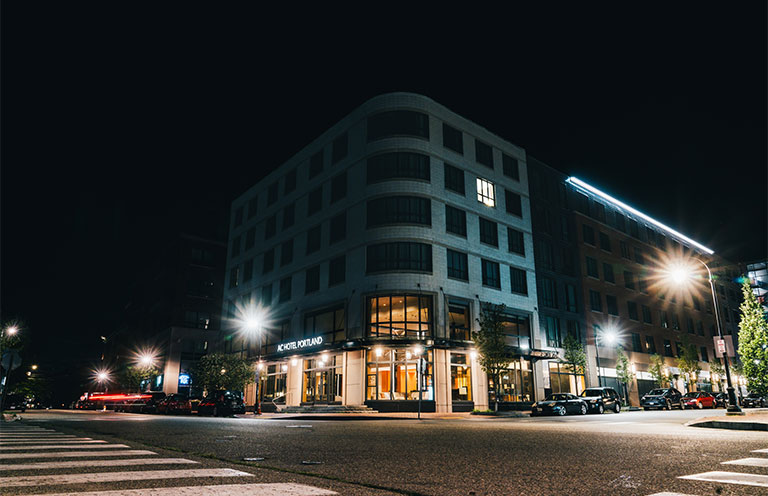
Before long, darkness began to fall, so they hopped back into the car and continued to Portland. After several wrong turns, they caught the glow of the AC Hotel by Marriott sign.
“We made it!” exclaimed the group, tired but triumphant.
The next morning, without phones to guide them, they asked the staff at the hotel front desk for breakfast recommendations and then set off on foot with a paper map.
“I called my mom from a landline,” Bella said. “I didn’t know how to use it. I had to call the front desk to ask how to make a phone call. It was so embarrassing.”
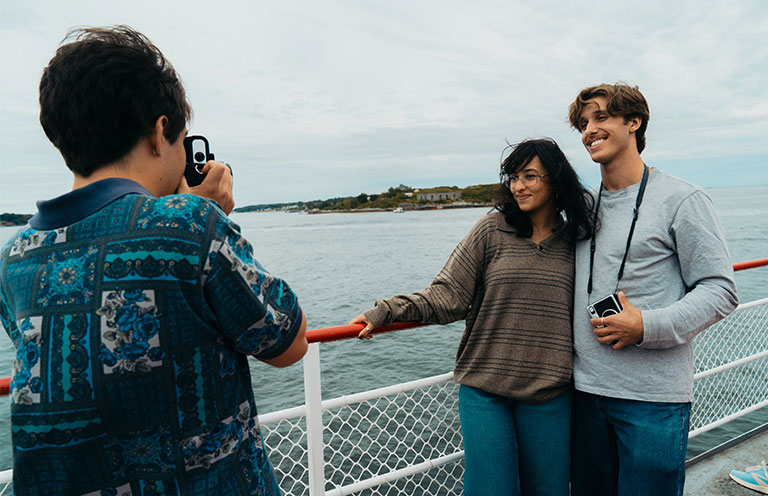
Later, they boarded a ferry to Peaks Island, just over a mile offshore. The ride offered prime views of Portland and rocky islands dotting the water.
On the island, they swapped their car for a golf cart, with Max driving.
“There’s heavy traffic in this area,” Cameron joked as another cart passed.
As their golf cart emerged from a canopy of trees, Cameron exclaimed, “There it is: the water!”
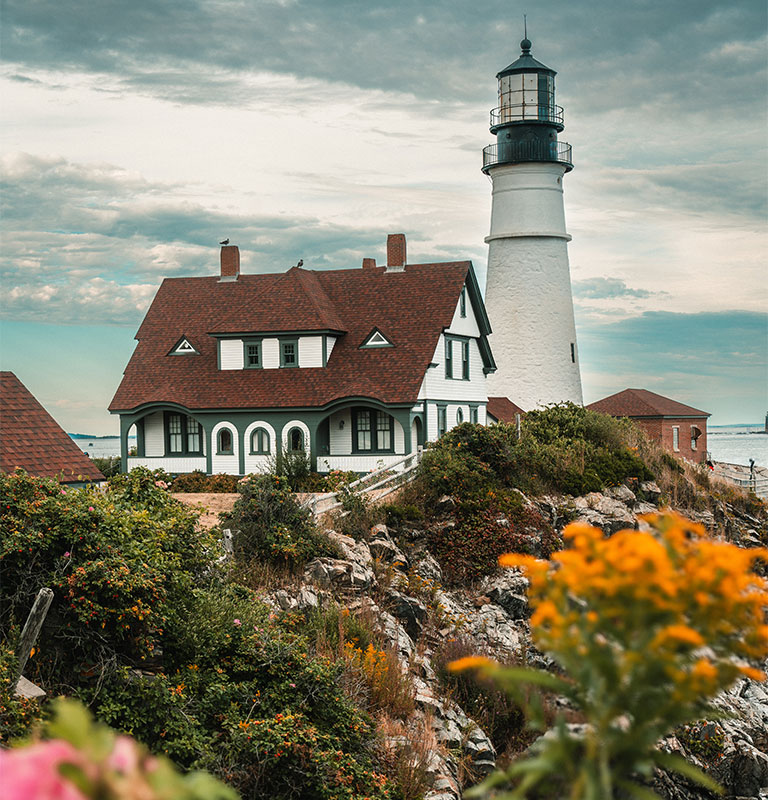
The thunderous waves crashed against the large gray rocks that fringed the coastline. The friends explored the coast, walking barefoot across the boulders and snapping group photos with their Polaroid before returning to the mainland to find the Portland Head Light lighthouse.
After circling unfamiliar streets, Cameron asked a local for directions. And then there it was: the tall white cylinder standing majestically against the rugged shoreline. The group got closer to explore the historic landmark, grabbing a group photo in front of it—for their memories, not their social media.
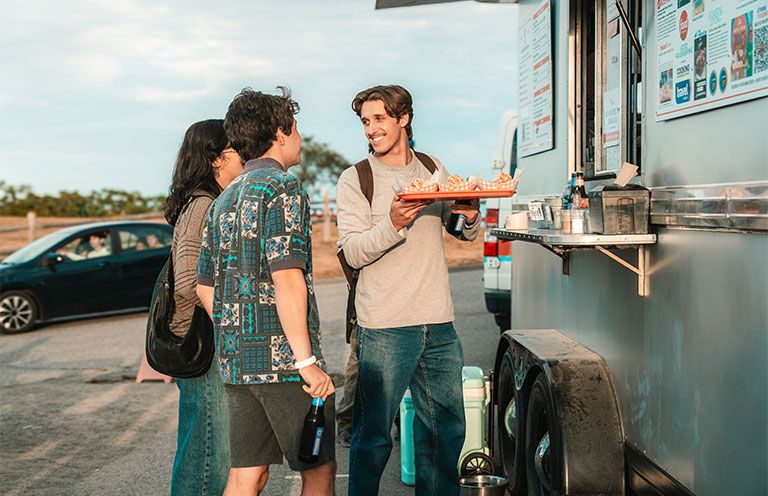
They ended the day with a seaside picnic of lobster rolls as the sun began to set on their adventure.
Getting lost—and found
On their final morning, the friends unlocked the case holding their phones.
“I almost feel like I don’t want it back,” Cameron said.
Then the quiet broke as their phone notifications came pouring in.
“I got like a million messages,” Bella said.
Reflecting on the experience, the friends agreed that traveling unplugged had changed how they approached travel—and each other.
“The hardest thing was navigating,” Max said. “But it made everything more rewarding.”
Cameron agreed, adding, “I think we’ve really improved our communication.”
And while there’s no denying that technology has transformed travel, some aspects of it are truly timeless, observed Bella.
“When we were kids on road trips, we made our own fun,” she said. “We can still do that. We just have to choose to.”