How to Deal with a Domestic Flight Delay or Cancellation
Take action—and take heart—with these tips if your flight is significantly delayed or cancelled
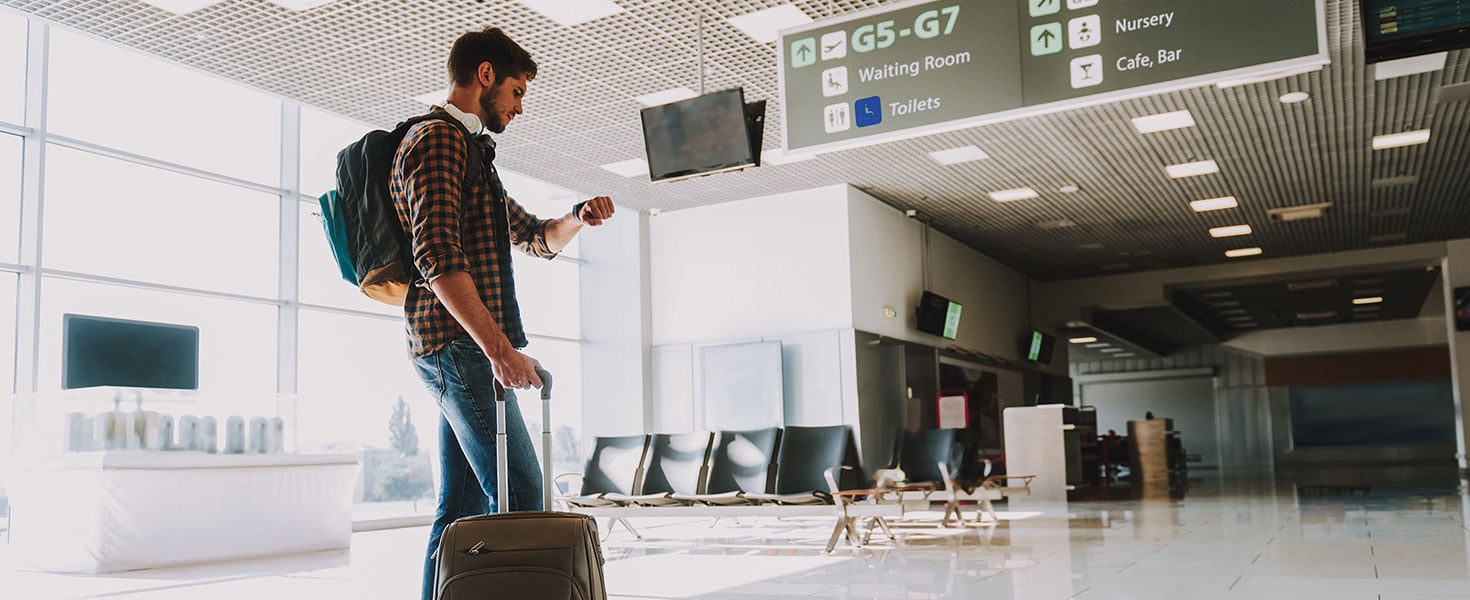


Crew shortages. Mechanical problems. Supply chain issues. And plain-old bad weather. Let’s face it: Flying these days comes with a host of challenges that can upend your travel plans faster than you can say “get me a rental car!” But if driving isn’t an option, the good news is that you need not…ahem, fly by the seat of your pants.
There are actions that you can take when your flight is delayed or cancelled due to reasons within your airline’s control. These include issues relating to staffing, maintenance, cabin cleaning, baggage loading and fueling. Here’s what to know.
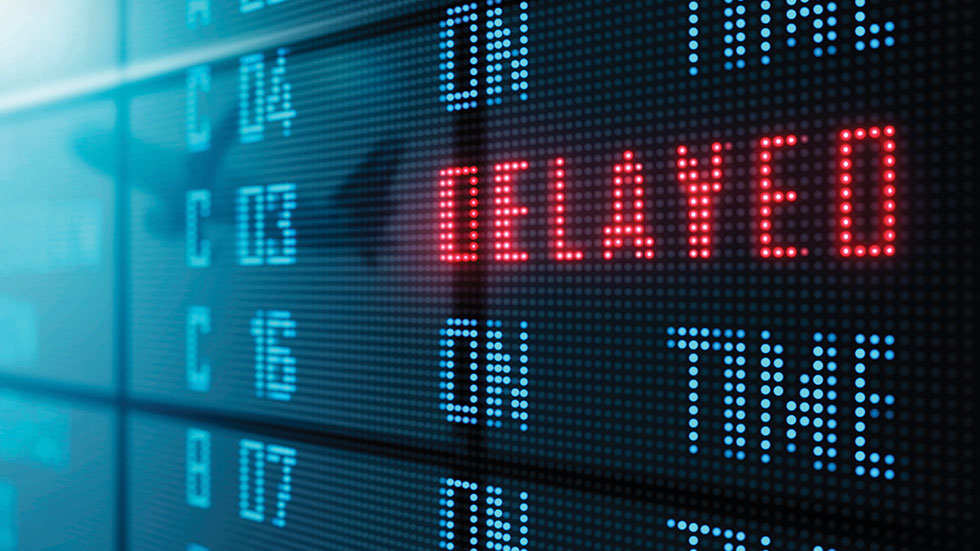
In plane language
Ten US airlines—Alaska, Allegiant, American, Delta, Frontier, Hawaiian, JetBlue, Southwest, Spirit and United—and their regional affiliates handle about 96 percent of domestic passenger air traffic, according to the US Department of Transportation (DOT). Each has its own policies for controllable flight delays and cancellations, which may include the following:
- Booking passengers on the same airline or another airline at no additional cost (interline agreements exist for this very reason)
- Supplying a meal or meal cash/voucher to passengers waiting three or more hours for a new flight
- Providing passengers with complimentary accommodations with a partner hotel and ground transportation to and from the hotel for an overnight delay or cancellation
If you experience a significant delay, cancellation or schedule change (for example, your flight is diverted to another city) and you don’t accept any of these offers, you’re entitled to a prompt automatic refund (within seven days for purchases via credit card and 20 days for other payment methods), according to the DOT. (Tarmac delays are another story.) That goes even for nonrefundable tickets and, continues the agency, “you are also entitled to a refund for any bag fee that you paid and any extras you may have purchased, such as a seat assignment.”
So, what’s a “significant” delay, schedule change or cancellation? The DOT defines “significant” as a departure or arrival time that’s altered by at least three hours for a domestic flight or six hours for an international flight. Travelers who encounter a change in their departure or arrival airport, an increase in the number of connections, or a major downgrade in onboard amenities or air travel experience due to a switch in aircraft type also are entitled to refunds. Further, airlines are mandated by the DOT to provide meal vouchers, overnight lodging, and ground transportation in certain airline-controllable situations resulting in extended flight delays or cancellations, though policies may vary from airline to airline (meaning some airlines are more generous than others).

Flight check
Even before booking your flight, carefully consider your airline’s contract of carriage, which airlines publish on their websites. The DOT also presents airlines’ policies on its Airline Customer Service Dashboard (www.transportation.gov/airconsumer/airline-customer-service-dashboard). The airlines must deliver on their promises, which the DOT oversees.
You can further reduce your risk of travel disruptions by booking nonstop flights. While typically more expensive, flights with no or few connections are less likely to experience problems as a simple matter of math. Consider the timing of your flight, too. Historically, Friday is the worst day to fly when it comes to delays and cancellations, and Tuesday is the best, reports AirHelp, an air passenger rights company. Also, morning flights are a better bet—before the ripple effect of possible glitches affects more flights as the day progresses. You’ll have more rebooking options earlier in the day, too.
Also, look at the airport’s track record when it comes to flight reliability. In a recent analysis, topping AirHelp’s list of the worst offenders this past summer was New York’s LaGuardia Airport, with 7.7 percent of flights cancelled. Also consider airports located in climates that are less likely to serve up a case of bad weather, particularly thunderstorms. And if possible, travel with just your carryon luggage for greater flexibility when rebooking flights and less chance of lost luggage.
If you don’t want to risk using that carryon bag as a makeshift bed in the airport, check your flight status before leaving home. When you book your ticket, sign up for your airline’s free flight status notifications via phone, email and/or text. You also can check flight delays and cancellations in real time via the FlightAware app or website (flightaware.com).
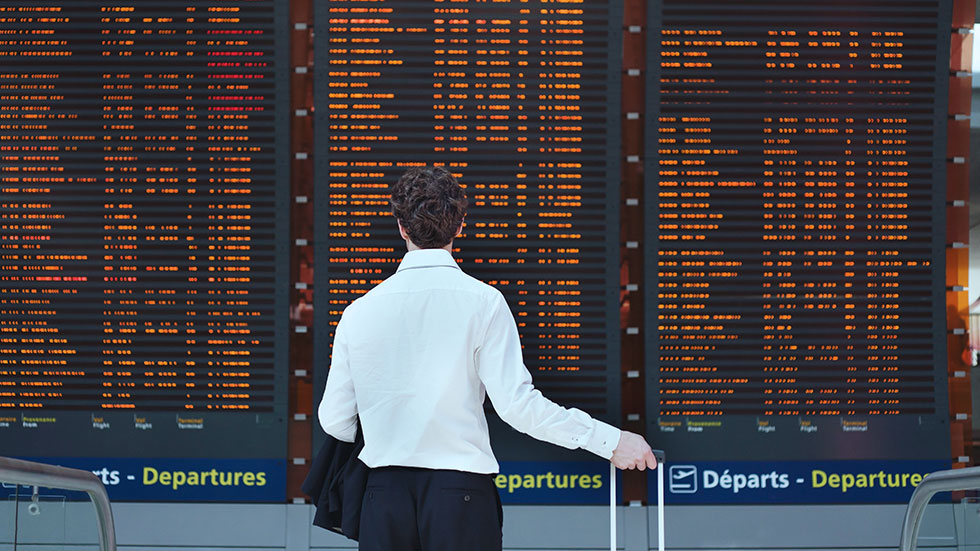
Traveling on the fly
Too late? You’re already at the airport when your plans…er, fly apart? Head to the airline agents’ desk—pronto. It’s first come, first served. While you’re waiting in line, call your carrier’s contact center (if you’re put on a long hold, try the international phone number), or use the airline’s app to reach a representative.
If you booked with a travel agency, call your travel agent, an indispensable lifeline in this scenario. An experienced agent knows how to navigate the situation with the airlines and research other itineraries to get you to your destination.
You can also try the airline’s app or self-service kiosk, where you may be able to see if your airline has automatically booked you on the next available flight or, if not, view flight options, change your flight and print a new boarding pass.
In the meantime, it pays to be persistent—and polite. An airline agent is more likely to go the extra mile for you if you don’t…well, fly off the handle. If you—or your travel agent—can offer a new flight itinerary, even better.
With some expert assistance and good old-fashioned perseverance, you’ll soon be on your way. And then, as they say in the business, have a nice flight!