7 Tips for Safe Winter Driving Every Motorist Needs to Know
From dealing with dead batteries to handling icy roads, here’s how to protect yourself and your car this winter, according to AAA experts


Cold temperatures, snow, and icy roads make winter driving extra challenging. The best ways to stay safe are to prepare your vehicle for winter and practice defensive driving habits, says Michael Belcuore, manager of Driver Education and Operations for AAA Club Alliance. Follow these tips from Belcuore to stay safe behind the wheel all season long.
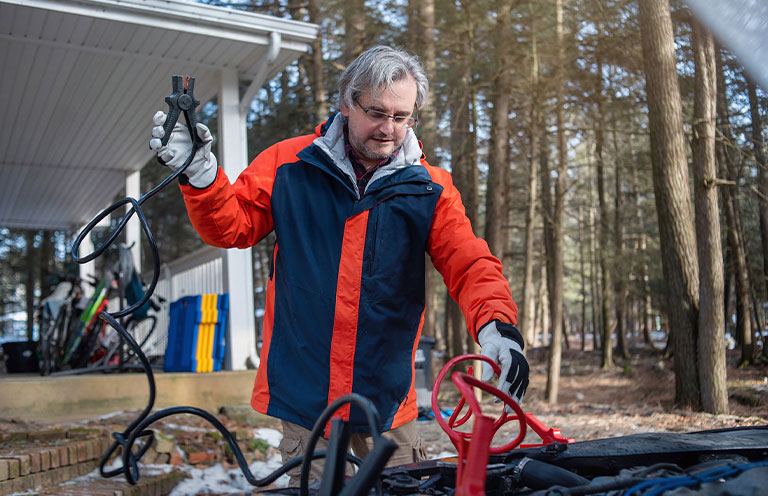
1. Check your car battery
“We get an influx of calls at AAA for our roadside assistance during the first cold snap because of dead batteries,” Belcuore says. That’s because cold weather slows the chemical reaction that allows the battery to generate electricity—an issue made worse due to a cold engine requiring more power to start. As a result, your car battery may not have enough strength to start the engine, especially if the battery is nearing the end of its average four- to six-year lifespan.
Take preventative measures by bringing your battery into a trusted auto parts store, says Belcuore, where technicians can test the battery’s health—often at no cost—and replace the battery if necessary.
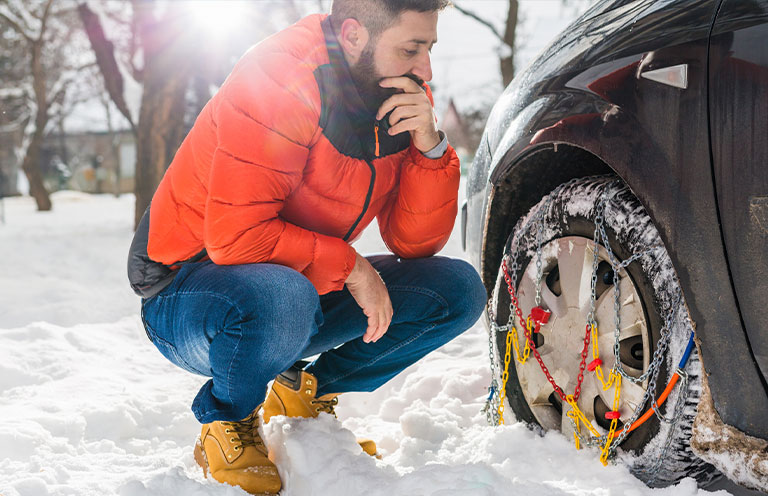
2. Assess your tires
Tires with tread at least 4/32 of an inch deep provide the best possible stopping power and resistance to hydroplaning. To check the tread depth, insert a quarter into the groove. If you can see all of George Washington’s head, it’s time to start thinking about replacements. (Learn more on how to check your tread depth and what it means for winter driving. )
Next, make sure your tire pressure is within the recommended range for your vehicle. You can find this number on a sticker on the driver’s door/door frame or in your vehicle owner’s manual. Don’t rely on the pound-force per square inch (psi) number listed on the tire itself; that figure may not match your vehicle’s specifications. If you’re considering upgrading to snow tires for the season, check out AAA’s guide to tire shopping.
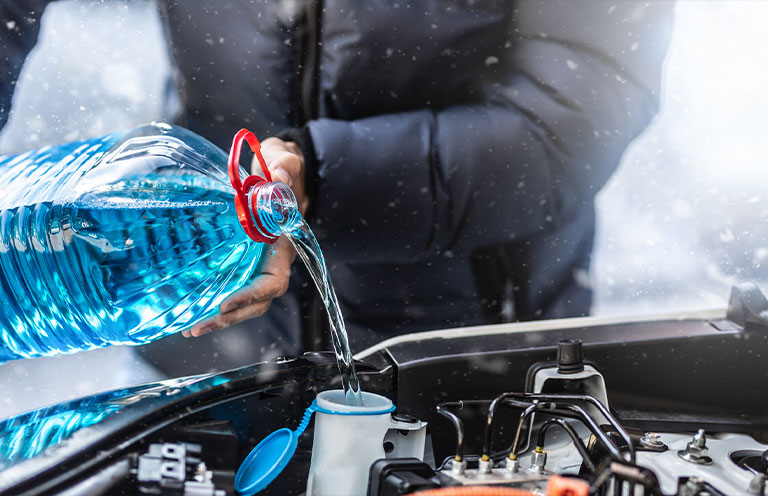
3. Top off fluids
Topping off fluids is critical for winter driving, helping maintain visibility, protect your engine, and reduce the risk of being stranded in harsh conditions.
Snow and road slush make windshield wiper fluid critical, so use a formula rated for sub-freezing temperatures to maintain visibility.
Check other vital fluids, too, including engine oil, coolant, and brake fluid. Cold temperatures can thicken oil and reduce engine efficiency, while low coolant increases the risk of freezing and engine damage.
Keep the gas tank at least half full to prevent fuel lines from freezing and ensure you have enough fuel in case of delays or emergencies.
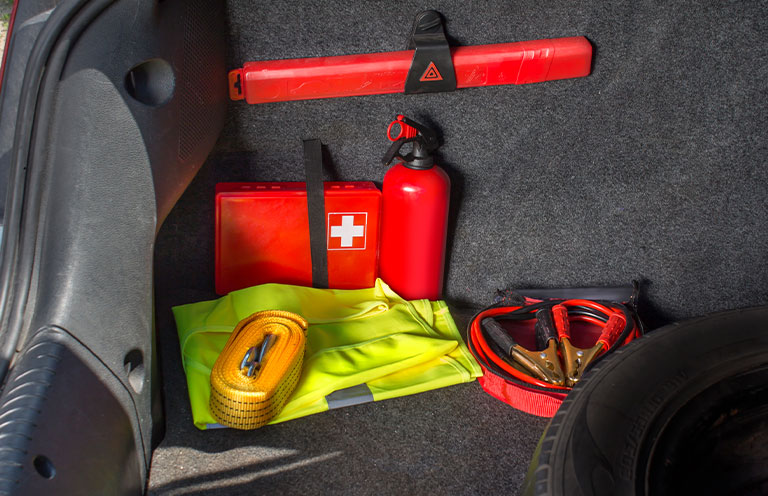
4. Stock your vehicle with emergency supplies
Being prepared for winter emergencies can keep you safe and comfortable if you get stuck on the roadside.
Your roadside emergency kit should include at least the following:
- jumper cables
- snow scraper and brush
- shovel
- bag of traction material—such as kitty litter, salt, or sand
- reflective triangles and road flares
- flashlight
- first-aid kit
- bottled water and nonperishable snacks
- warm blanket
- phone charging cable and/or power bank
Also consider purchasing an emergency road kit that combines many of these essentials in one convenient package.
5. Clear ice and snow safely
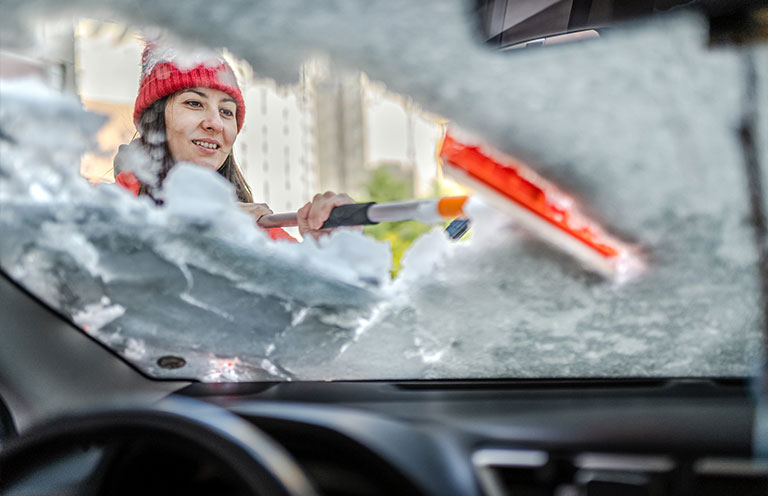
While your car is parked, start your car and turn on the heat to expedite the melting process. Then, follow these tips to safely and effectively remove ice and snow:
- Never leave your car unattended with the keys inside. Car thefts typically rise during colder months when drivers warm up their vehicles, notes Belcuore.
- Instead, use this time to brush off all vehicle windows, mirrors, and lights with a plastic ice scraper and a soft-bristled brush.
- Clear headlights, taillights, license plates, and the roof to maintain visibility and prevent snow from sliding onto your windshield or spraying onto other vehicles.
- Ensure windshield wipers aren’t frozen to the glass before turning them on.
- Never use hot water to remove snow or ice from your windshield; the rapid temperature change can cause the glass to crack or shatter.
- Use de-icing sprays for stubborn ice on locks. Carefully follow instructions to avoid damaging surfaces.
6. Drive defensively
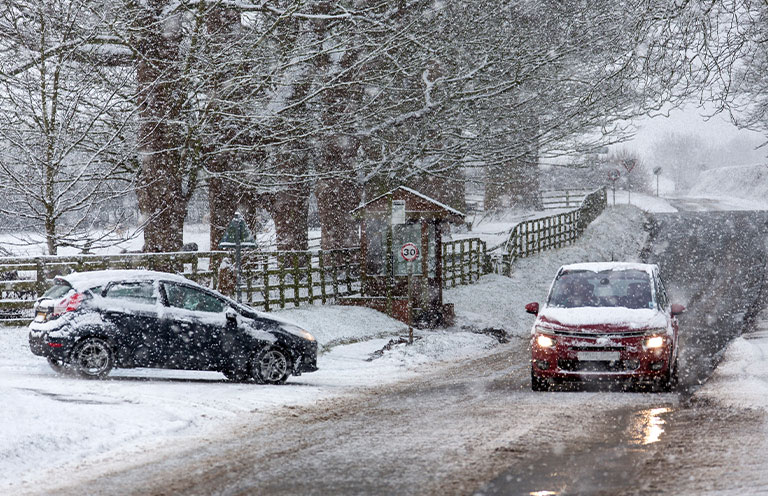
Winter roads are often slippery, and winter conditions can reduce visibility and slow your reaction times, so give yourself extra space and adjust your driving behaviors to prevent accidents, cautions Belcuore.
- Leave early to prevent having to rush.
- Choose safer routes, opting for straighter, less hilly roads when possible.
- Increase following distance. On slippery roads, leave six to eight seconds of space between your car and the one ahead (doubling the usual three to four seconds). Measure by picking a stationary object and counting until you pass it.
- Avoid unnecessary lane changes to reduce the risk of hitting patches of ice between lanes.
- Control acceleration and braking. Avoid sharp movements that can cause the vehicle to slide.
- Use your headlights. Even during the day, headlights improve visibility. Avoid high beams in heavy snow, as they can reduce visibility.
7. Remain calm
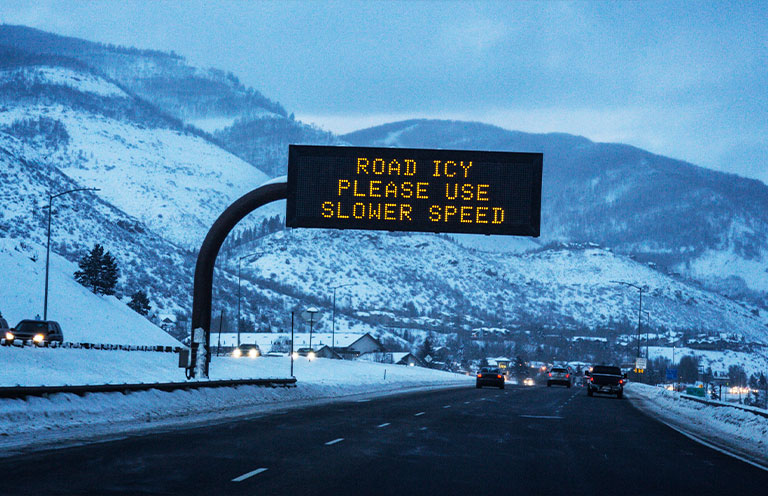
If your vehicle does slide, it’s important to keep your movements controlled. Ease onto your brakes rather than slamming them, and steer gently in the direction you want the car to go. As your tires regain traction, the car will follow your intended path.
If you do get stuck and are in a safe location, remain inside your vehicle, and request AAA Roadside Assistance for help. AAA will come to your rescue to get you back on the road as quickly and safely as possible, providing peace of mind for whatever winter weather comes your way.